
-1.png)
How Translucent Panels Deliver What Traditional Glazing Cannot
As an architect, you face a fundamental challenge: bringing abundant natural light into buildings without compromising thermal performance, occupant comfort, or energy efficiency. Traditional glazing creates glare hotspots, drives up cooling loads, and requires expensive structural support. Kalwall’s translucent daylighting systems address these issues through sandwich panel technology, and their complimentary Daylight Modeling Service helps you validate design decisions early in the process. The service allows you to compare different configurations and confirm that light levels meet the specific needs of each space—whether that's accounting for task requirements or occupant age. Having access to modeling data means you can present clients with performance projections backed by measurable analysis rather than estimates.
The Glare and Thermal Transfer Problem
Conventional glass curtainwalls flood perimeter zones with harsh direct light while leaving interior spaces dim. This creates visual discomfort, forces reliance on artificial lighting in core areas, and generates unwanted solar heat gain that strains HVAC systems. The result: uncomfortable occupants and escalating energy costs.
Kalwall's fiberglass-reinforced polymer (FRP) panels eliminate this problem through diffusive light transmission. The panels scatter incoming daylight evenly throughout interior spaces, penetrating deeper than conventional glazing while blocking 100% of harmful UV rays. This museum-quality illumination eliminates glare and harsh shadows, reducing artificial lighting needs while supporting occupant wellness through improved circadian rhythm regulation and visual comfort.
The Insulation vs. Transparency Dilemma
Energy codes demand high-performance envelopes, yet architects need natural light. Traditional solutions force compromise: either sacrifice daylighting for insulation or accept thermal inefficiency for transparency. This false choice leads to overglazed buildings with massive HVAC loads or underlit spaces dependent on electric lighting.
Kalwall eliminates this tradeoff. The system achieves U-factors from 0.29 down to an unprecedented 0.05 (R-20)—thermal performance equivalent to solid walls—while maintaining 4-35% visible light transmission depending on configuration. Premium Lumira aerogel-filled panels deliver this breakthrough through nanoporous insulation that blocks heat transfer while allowing light passage. Solar heat gain coefficients as low as 0.04 provide exceptional control in cooling-dominated climates.
This thermal performance translates directly to operational savings. Projects report dramatic reductions in both artificial lighting costs and HVAC loads, with heated indoor pools maintaining comfortable temperatures even in severe winter conditions without heat loss through Kalwall roof assemblies.
The Structural and Cost Burden of Glass
Large-span daylighting with traditional glazing demands heavy structural support, complex installation logistics, and safety considerations that drive up construction costs. Glass weighs approximately 6 lb/ft², requiring substantial framing, lifting equipment, and large installation crews.
Kalwall panels weigh approximately 2 lb/ft², enabling dramatic cantilevers and clear spans impossible with glass. Single wall panels reach 20 feet, while self-supporting skyroofs span 24 feet without intermediate supports (load dependant). Monumental applications can achieve up to 100-foot clearspans when paired with our aluminum framing system. This lightweight construction reduces substructure requirements, simplifies installation (two-person crews handle large panels), and lowers overall project costs.
The panels also meet OSHA fall-through compliance standards, meaning properly maintained roof installations can be walked on without protective screens or safety cages—significantly reducing long-term maintenance costs and safety risks.
The Durability and Maintenance Challenge
Building owners increasingly demand low-maintenance exterior systems that maintain appearance and performance over decades. Traditional systems often require frequent cleaning, suffer from condensation issues, or degrade under UV exposure.
Kalwall's low maintenance FRP faces feature a proprietary weatherable coating technology—normal rainfall maintains exterior surfaces while panels retain original color during weathering. The material resists mildew, fungus, corrosion, termite damage, acids, alkalis, and common solvents. Condensation resistance factors of approximately 80 or better eliminate the moisture problems that plague conventional glazing systems in high-performance applications.
Design Support That Removes Uncertainty
Specifying innovative daylighting systems creates performance uncertainty. Will the system deliver adequate light? Will glare become problematic? How will energy performance compare to conventional approaches?
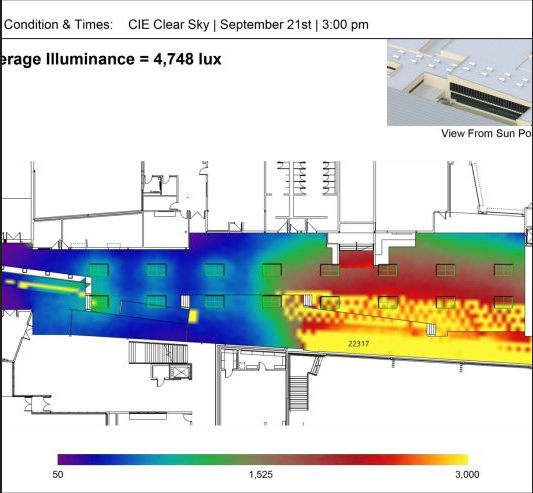
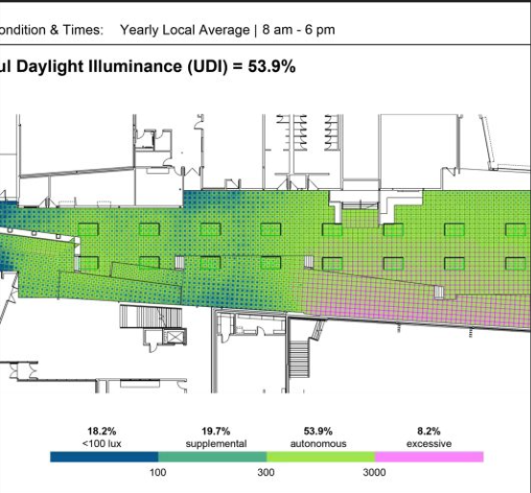
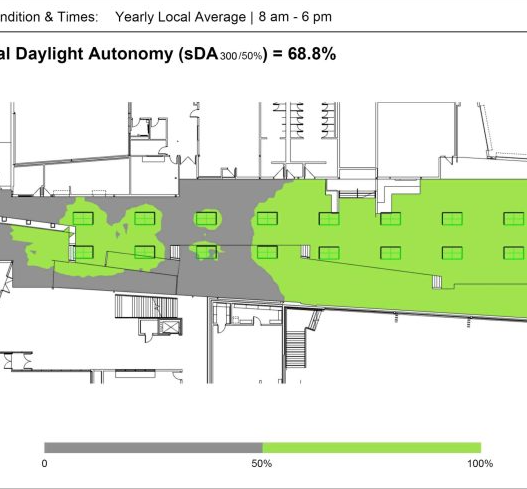
Kalwall provides complimentary daylight modeling services using industry-leading simulation tools. Architects submit basic 3D models; Kalwall's team delivers false-color visualizations for a variety of metrics such as, Spatial Daylight Autonomy (sDA) analysis, Annual Sunlight Exposure (ASE), Radiance point-in-time illuminance, Visual Daylight Glare probability, Useful Daylight Illuminance (UDI) and Equivalent Melanopic Lux (EML)/Circadian Lighting, and optimization recommendations—empowering informed decisions without requiring specialized software expertise. Daylight Modeling can also provide assurance that projects will meet or exceed LEED and WELL v2 design criteria for daylighting credits.
Discover Kalwall on Acelab’s Material Hub
Acelab's Material Hub intelligence platform provides comprehensive specifications, performance data, and technical resources for Kalwall and thousands of other building products. Access detailed product information, create specification documents, and leverage AI-powered search to solve your most challenging material selection problems. Explore how high-performance daylighting systems can elevate your next project.
.jpeg)
.jpeg)