AUTHOR
David Lemont
Executive Chairman, Acelab · Former CEO, Revit
The world of design intent — where creativity, proportion, and material choices define what a building will become. And the world of technical documentation — where those decisions get translated into the specs, drawings, keynotes, and schedules that actually build it.
For most of history, those two worlds stayed out of sync. Not because architects weren’t diligent. Because the tools didn’t connect them.
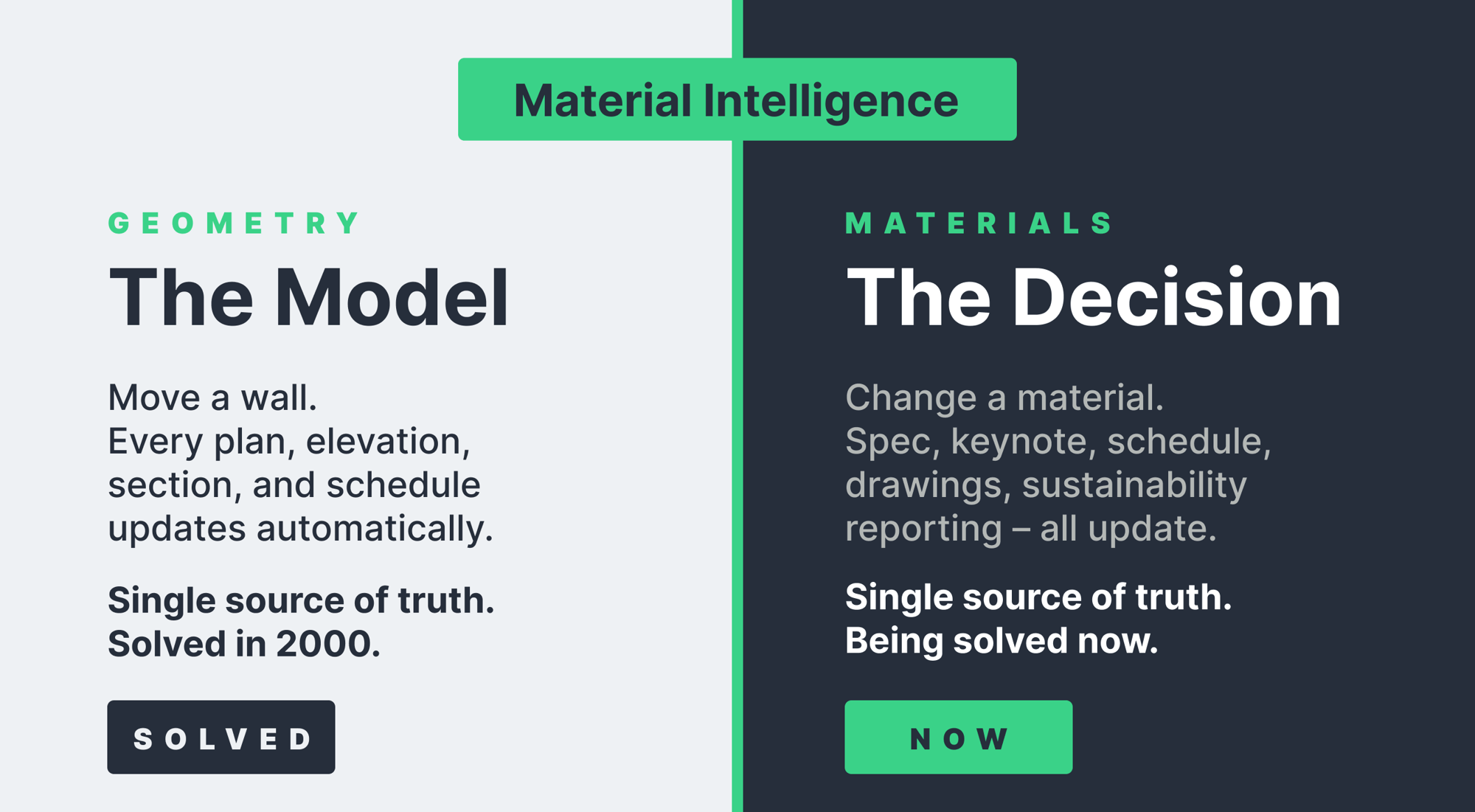
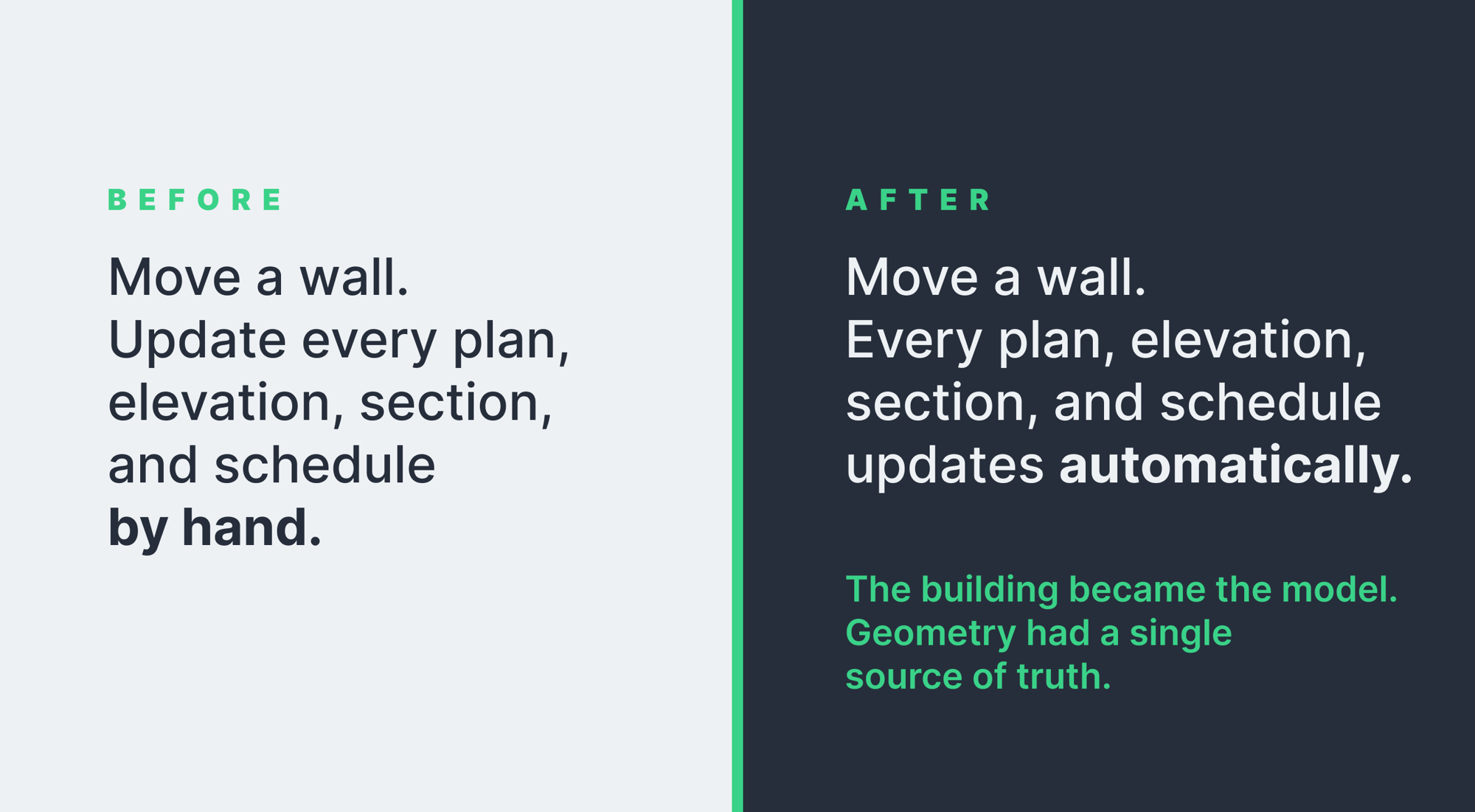
Before parametric modeling, changing a wall meant manually updating every plan, elevation, section, and schedule that referenced it. Hours of coordination work on every significant design decision. Revit made the building the model. The drawings became outputs. Change the model, everything updates. That coordination problem is solved.
But Revit solved the geometry problem. It didn’t solve the materials problem.
Revit knows the wall. It carries the material assignment. What it doesn’t carry is the intelligence behind that assignment — the certification data, the keynote value, the schedule entry, the sustainability attributes. That information lives somewhere else. In a spec binder. In a spreadsheet. In a submittal package. Maintained separately on every project, by every team member, updated manually every time a material decision changes.
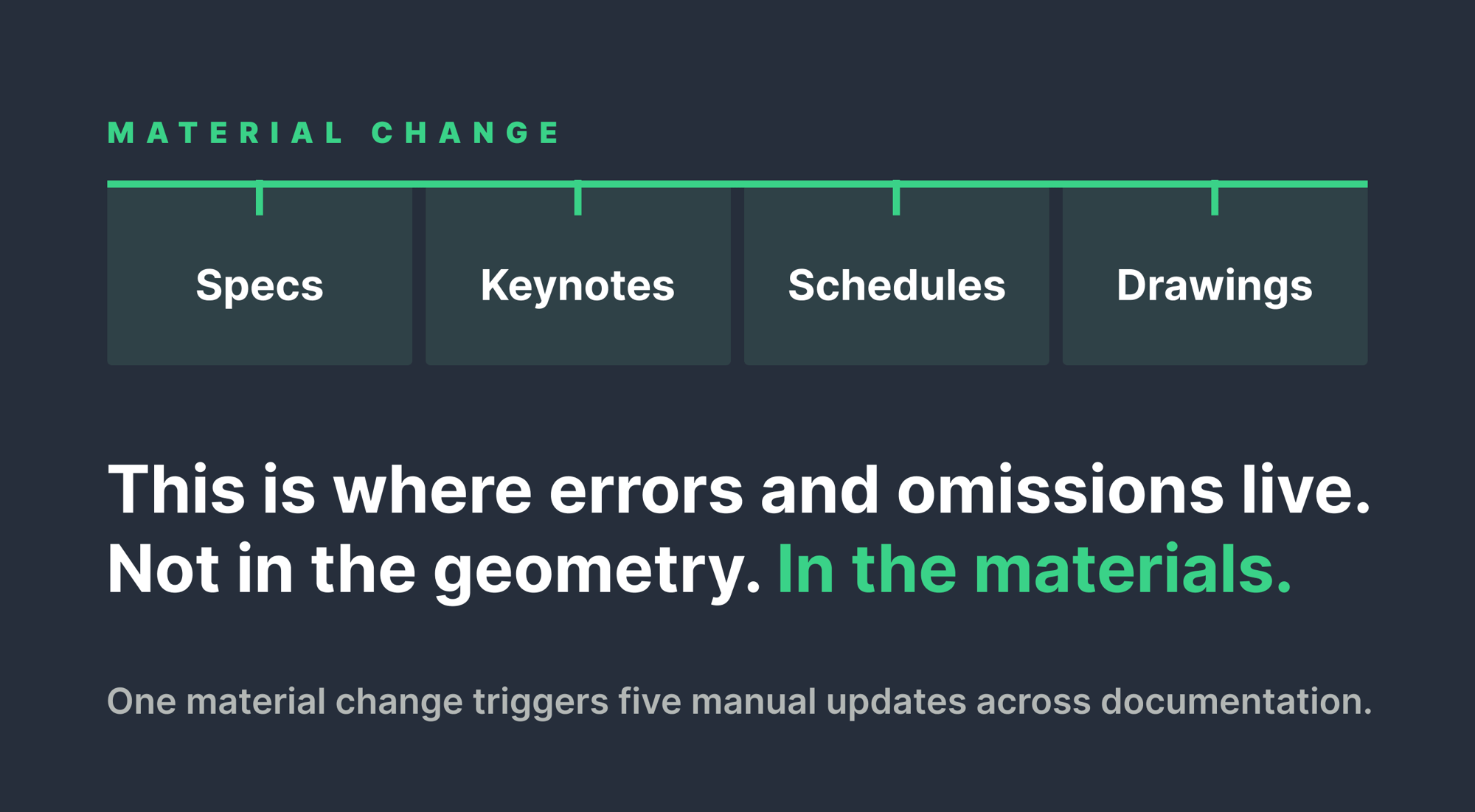
Change a material selection and the cascade begins. Update the spec. Update the keynote. Update the schedule. Update the submittal. Miss one and you have an error. Miss two and you have an omission. This is where drawing set coordination failures are born. Not in the geometry. In the materials.
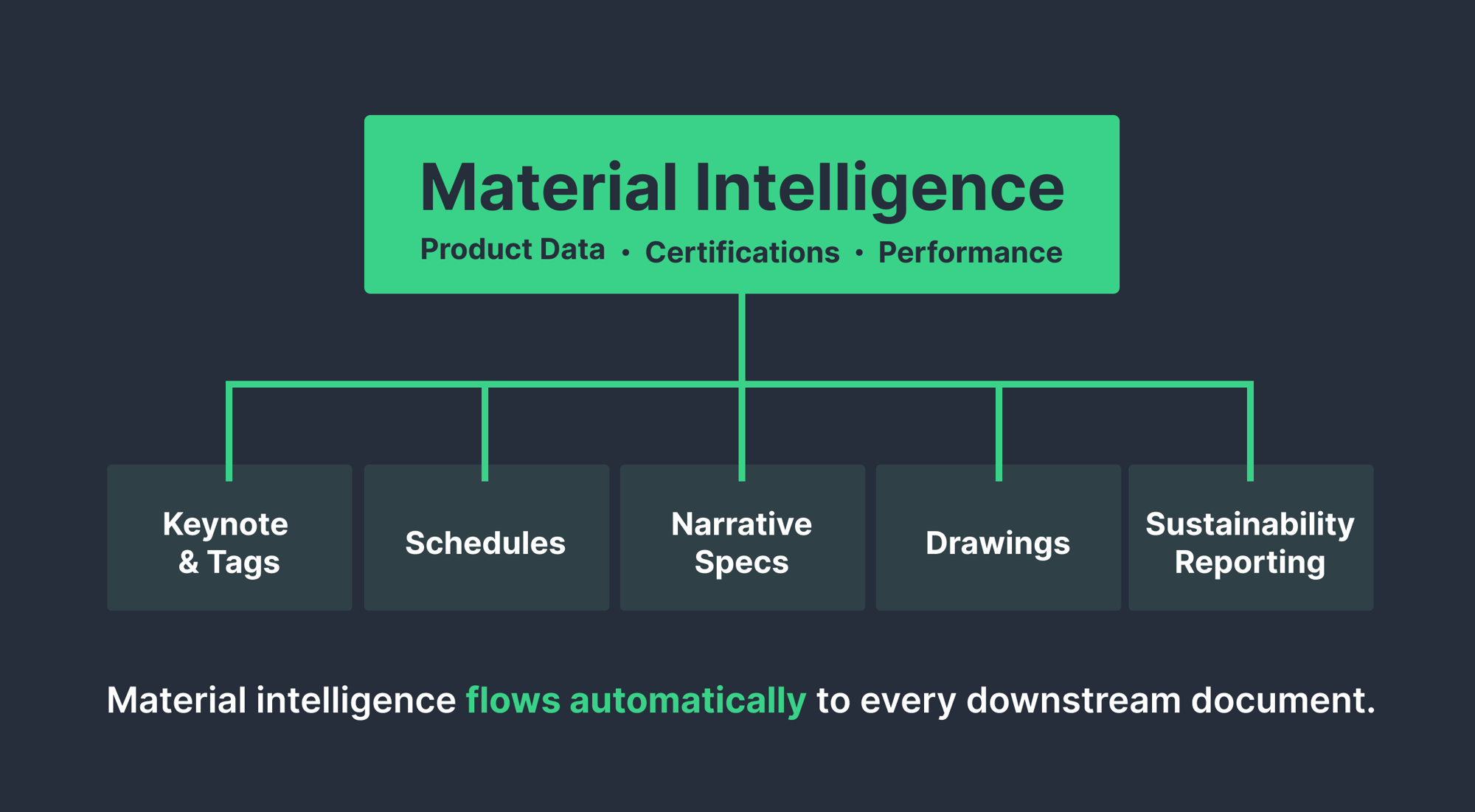
Material intelligence is the foundation that makes material decisions parametric. Every product carries the data that drives documentation — performance attributes, certifications, keynote values, schedule entries, sustainability metrics. When a selection is made in Material Hub, that intelligence flows automatically to everything that depends on it. Keynotes update. Narrative specs are generated. Schedules populate. Drawings reflect the current selection. Sustainability reporting stays current.
The material decision becomes the single source of truth. The same logic Revit applied to geometry, now applied to materials. This isn’t a workflow improvement. It’s a structural change in how documentation gets produced. The manual update cascade doesn’t get shorter. It disappears.
There is a deeper benefit here beyond coordination and efficiency. When the right data is present at the moment of selection — performance attributes, certifications, sustainability metrics, firm standards — architects make better material choices. Not just faster choices. Better ones. More appropriate products get specified. More sustainable solutions get built. Material intelligence doesn’t just document decisions. It improves them.
When Revit introduced parametric modeling, most firms looked at the learning curve and the workflow disruption and decided to wait. The firms that moved early built a capability advantage that compounded over years. The firms that waited paid more to catch up and never fully closed the gap.
The pattern is the same today. Material intelligence is not a feature firms will evaluate at their leisure. It is a capability that early adopters will build into their practice while others are still maintaining specs by hand.
The firms that move now will document faster, coordinate more accurately, and produce sustainability reporting that doesn’t require a separate effort at the end of a project. They will spend less time on coordination and more time on design. That advantage compounds.
When Revit made geometry parametric, the firms that moved early never looked back. The firms that waited paid to catch up and never fully closed the gap.
Material intelligence is the same moment.
I know because I've stood here before.
_________
David Lemont | Executive Chairman, Acelab | Former CEO, Revit