

Our Mission
Materials are the soul of every building. The right choices mean structures that endure, achieve sustainability goals, and perform efficiently. The wrong ones lead to deterioration, compromised sustainability, and excessive operating costs. Yet despite representing over 40% of building costs and fundamentally shaping every building’s success, material decisions remain compromised: the stakeholders who must collaborate — architects, owners, contractors, and manufacturers — work from disconnected information, fragmented systems, and incompatible data. This is built into how the industry manages material information, and it requires a different model entirely.
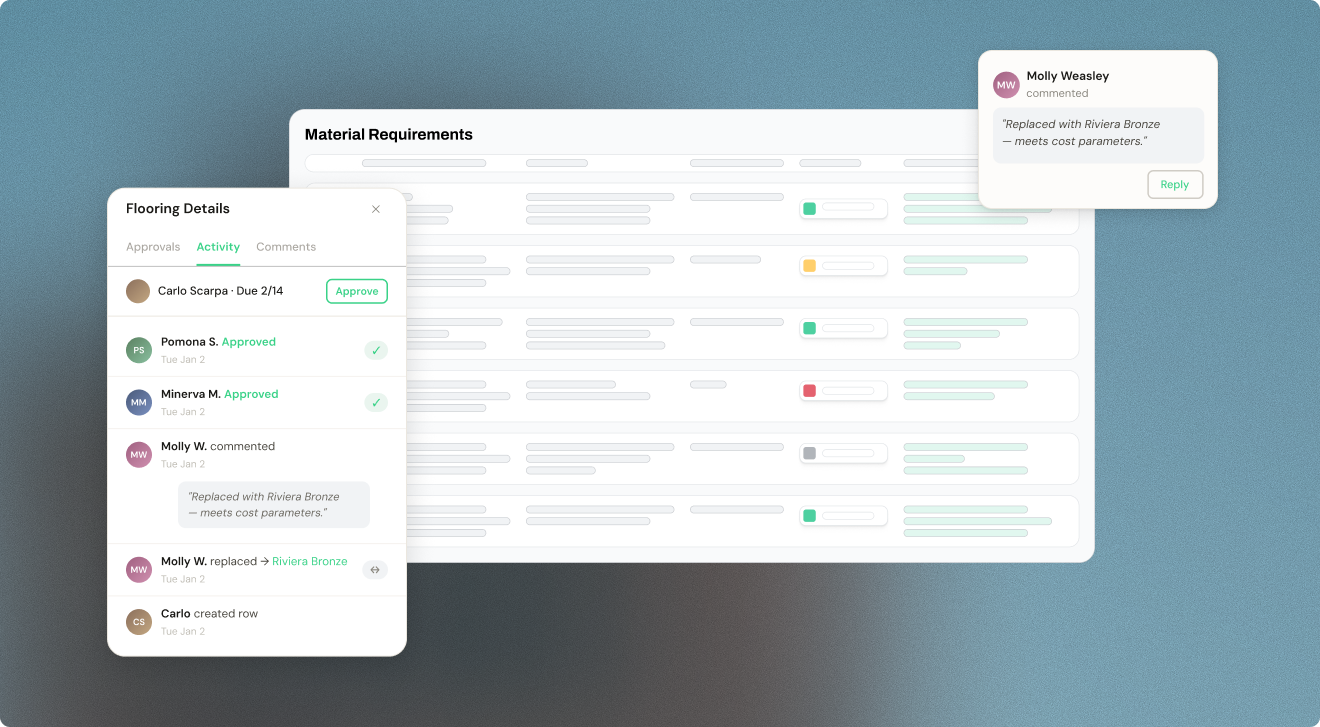
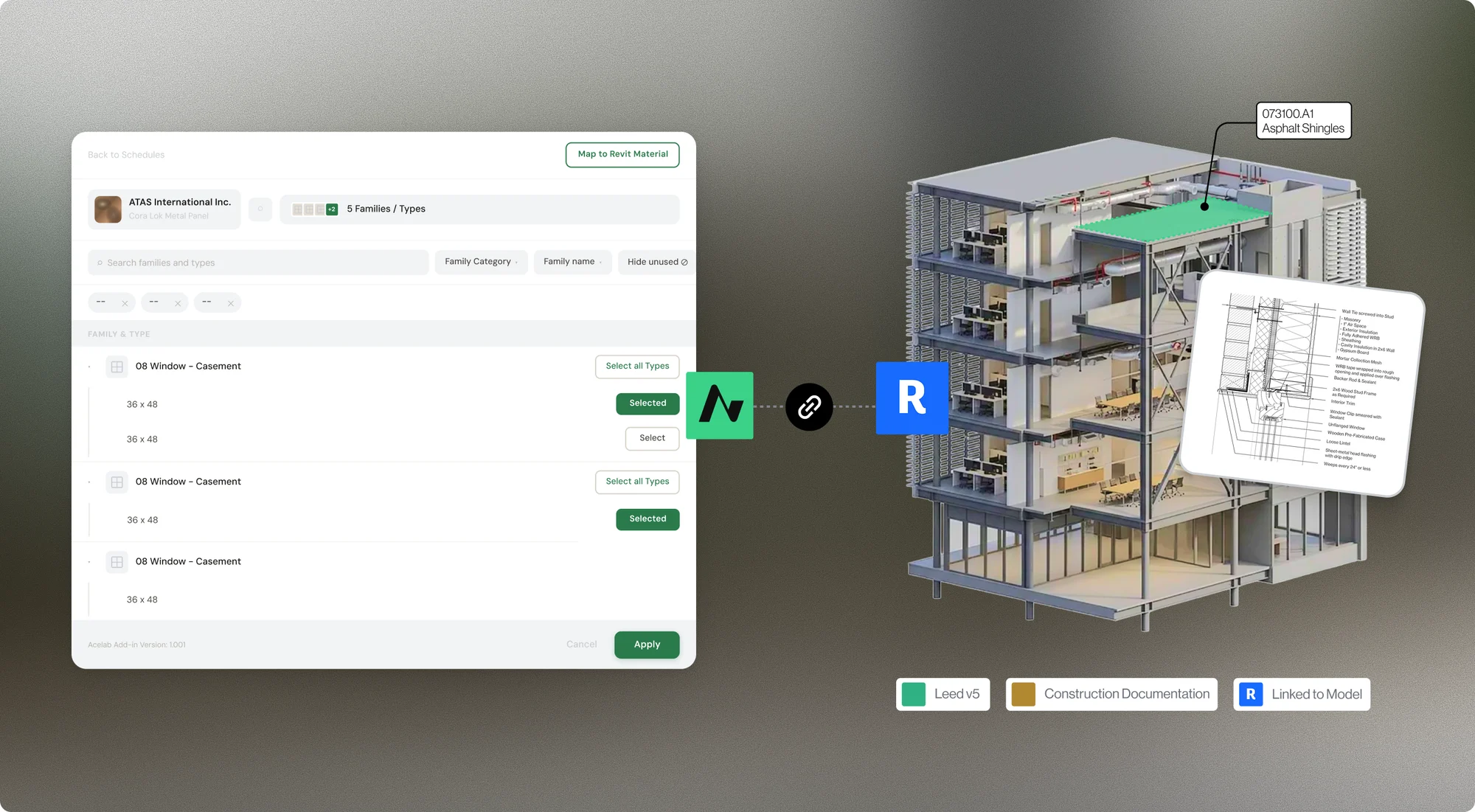
Revit solved the equivalent problem for building geometry. When a wall moved in the model, every plan, section, elevation, and schedule updated with it. Bidirectional associativity made the model the single source of truth and eliminated the era of manually coordinating drawings. But Revit stopped at geometry. The material decisions that filled those walls have never had the same treatment. Material Hub closes that gap. A material decision made in Material Hub is a record — carrying the full attribute set of that product — from which every downstream document is generated. Change the selection and every document updates with it: specs, schedules, keynotes, Revit drawings, sustainability reports. This is what we mean by material intelligence.
We’ve built the industry’s first material intelligence platform — a common data backbone where all stakeholders access the same comprehensive material information, work from shared standards, and collaborate through integrated tools. Our vision is material-forward design: integrating material intelligence directly into the design process, so architects make better decisions while designing, with documentation flowing automatically. When owners establish sustainability requirements and portfolio standards, architects research performance criteria, contractors verify availability and weigh in on installability, and manufacturers connect their products to active projects, they’re all drawing from the same foundation of truth — working together in real time rather than passing disconnected documents.
Our Solution: The Material Intelligence Platform
Material Hub is built on a single governing principle: one record for every material decision, and every document generated from that record.
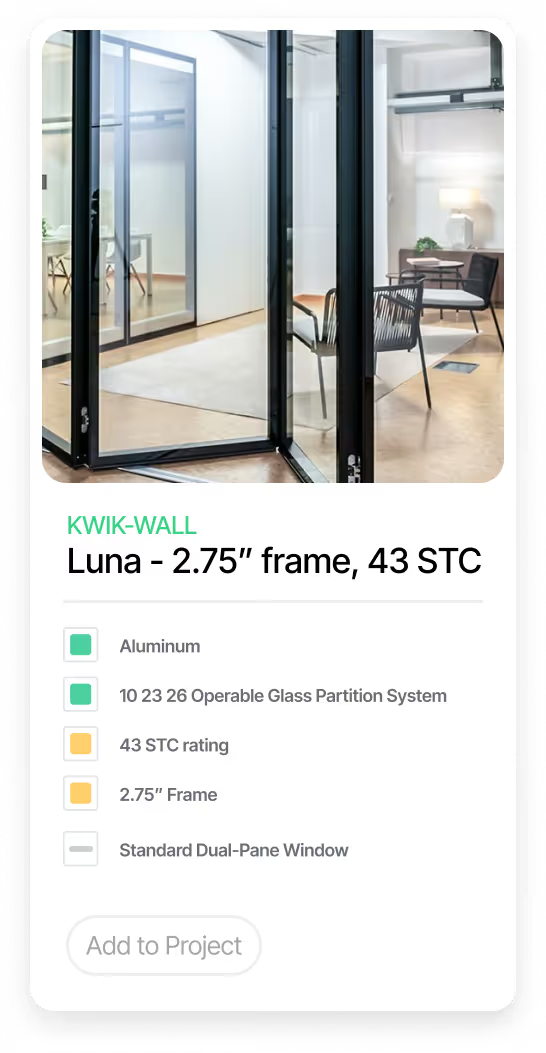
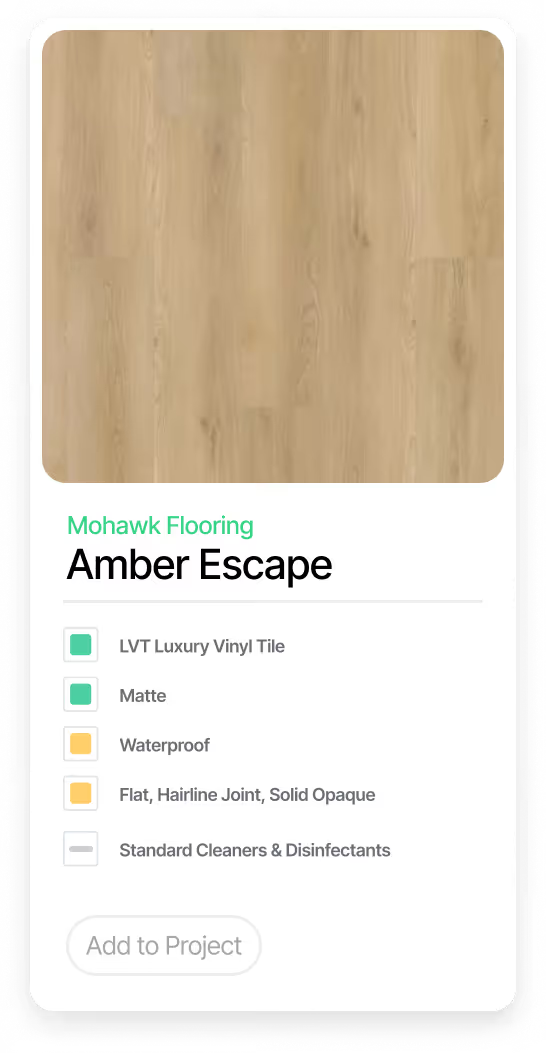
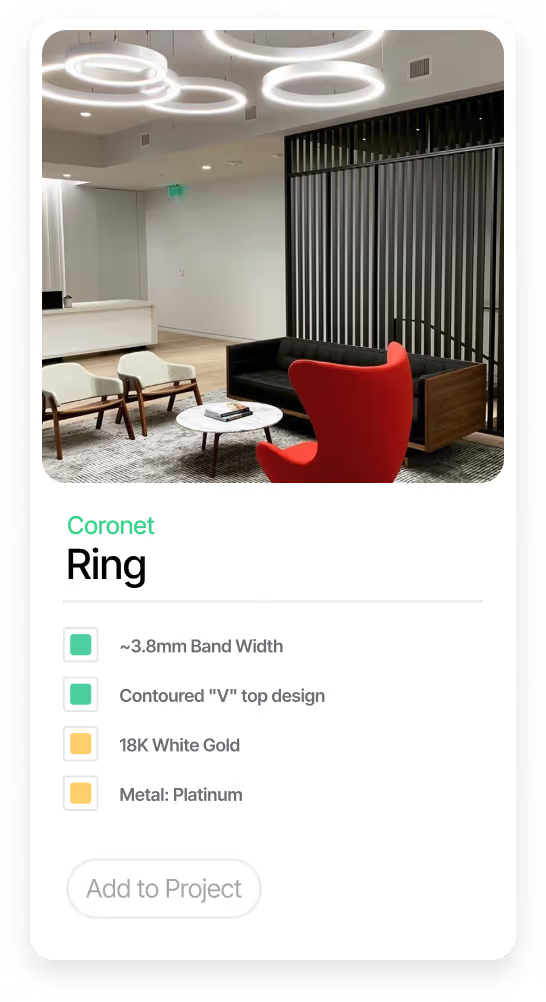
When a product is selected in Material Hub, it is not logged in a spreadsheet or saved to a folder. It becomes a structured record — carrying the full attribute set of that product, its performance data, sustainability certifications, cost, and specification language — from which every downstream document is produced. Specs, keynotes, finish schedules, Revit drawings, and sustainability reports are all generated from that record, not maintained alongside it. When a selection changes, every document where that product appears updates. No manual coordination. No chasing changes across five deliverables. No discrepancies between what was selected and what was documented.
This is what makes material intelligence different from a materials database or a specification tool. It is not a better place to store information. It is an intelligent single source of truth from which the entire documentation set flows.
One record. Every document a view of that record. Always accurate.
The Material Intelligence Backbone
Material intelligence is only as good as the data behind it. Today, Material Hub tracks over 250,000 products from 10,000-plus brands — and that number grows every day. We monitor 2,000-plus certifications, track performance across 200-plus technical attributes, catalog 60-plus aesthetic characteristics, and maintain alignment with 30-plus building codes. Sustainability data is verified at the source — HPD disclosures pulled directly from the Health Product Declaration Collaborative and embodied carbon data integrated from EC3. So material records carries third-party verified environmental intelligence, wherever feasible and updated continuously as manufacturers introduce new innovations, certifications evolve, and sustainability requirements advance.
.jpg)

.jpg)
.jpg)
No single architect, firm, or team of experts can keep pace with this. Even firms that invest heavily in building their own material libraries face an impossible maintenance challenge. Products are discontinued. Certifications are updated. New performance data emerges. What took months to compile becomes outdated within weeks. The institutional knowledge firms work hard to capture gradually becomes less reliable — not because the effort wasn’t worthwhile, but because maintaining current, comprehensive material intelligence is too vast a task for any single organization.
This is where Material Hub’s AI layer changes what is possible. The platform doesn’t just know products in isolation — it understands how they perform in real applications, how they align with a firm’s basis of design, how they meet specific project constraints, and how they compare across multiple dimensions simultaneously. Material intelligence that once took hours of expert research becomes accessible to anyone on the team.
This backbone is what makes the single source of truth real. Without comprehensive, current, structured data, the record is incomplete. The documentation cannot be accurate. The collaboration lacks substance. With it, every stakeholder draws from the same foundation — and every decision they make is better for it.
How Every Stakeholder Works From One Foundation
Material Hub connects every stakeholder to the same material intelligence — transforming material decisions into structured records that automatically generate the documentation each stakeholder needs, always accurate, always current.
Owners Set Standards and Control From the Beginning
Owners define portfolio-wide material standards — living connections to comprehensive product data, sustainability criteria, and performance requirements that flow directly into every project. When architects explore alternatives, owners see decisions with complete context: performance data, sustainability metrics, cost implications, and code compliance. Portfolio management becomes strategic rather than reactive.
Architects Build on Owner Standards to Design Better Solutions
Architects link Revit building elements directly to Material Hub, connecting design to the material intelligence behind every product in the platform. Selections flow automatically into keynotes and tags. When keynotes update as material decisions change, the persistent problem of keeping product data synchronized with drawings is solved. Those decisions generate schedules, specifications, embodied carbon analysis, and cost estimates from the same material record — freeing architects to focus on design. The material intelligence behind every selection flows forward automatically. Nothing is rebuilt from scratch.
Contractors Work From Certainty, Not Assumptions
Contractors access the same material intelligence platform that owners and architects have been working from throughout design. Specifications are living connections to complete product data — installation requirements, availability, pricing, and manufacturer contacts — not ambiguous documents requiring interpretation. When substitutions are necessary, contractors see the reasoning behind original decisions and use the same data to identify alternatives that truly match intent. Submittal packages, cut sheets, as-built documentation, and warranty tracking are produced from the same record, without hunting across multiple sources.
Manufacturers Connect at Decision-Making Moments
When architects research materials, Acelab’s AI surfaces products based on technical fit — and manufacturers can engage directly through an interactive RFI workflow during active decision-making, not months too late. As products enter firm libraries and portfolio standards, manufacturers become the basis of design for future projects. Innovation reaches receptive audiences, proven performance builds institutional knowledge, and lasting relationships develop between manufacturers and the firms that specify their products.
Material-Forward Design
Our vision is to integrate material selection deeply into design itself — making intelligent material choices quick, informed, and automatically documented. This is material-forward design: where all the information needed to make the best decisions is available at the appropriate moments.
The traditional documentation process runs behind the design process. Decisions are made, then documented — often weeks later, often by someone other than the person who made the choice, often from incomplete information. Material-forward design inverts that sequence. Documentation is not produced after decisions are made. It is produced as they are made, from the same material intelligence record that drove the decision itself.
Imagine a designer working in Revit who places an interior door family. That element is tagged with material requirements — performance criteria, sustainability goals, budget constraints — but not yet linked to a specific product. The design continues. Later, when it is time to decide, the designer searches their firm library for the standard door or explores Material Hub’s database for alternatives. Acelab surfaces swatch information, available colors and finishes, embodied carbon data, fire ratings, acoustic properties, and durability metrics — all at the moment the decision is being considered, not retrieved later from a separate system.
When the product is chosen, the material record updates. Keynotes generate automatically in Revit schedules. The same data flows into the spec section. Drawings, schedules, and specs all reflect the same decision, coordinated from a single source. If the selection changes, every document where that product appears updates with it. The documentation is never behind the design. It is always current because it comes from the same place the design does.
The result is not just efficiency. It is accuracy that was previously impossible — and a documentation set that can be trusted because it was never assembled by hand.
The Compounding Effect of Material Intelligence
The true power of Material Hub emerges not from isolated decisions but from what happens when material intelligence accumulates across thousands of projects and firms. Each decision captures what was learned — installation successes, performance outcomes, substitution experiences — and that knowledge enriches the platform for everyone who follows. Architects learn from peers’ real-world experience. Owners build standards informed by actual portfolio performance. Contractors access installation wisdom from projects they never touched. Manufacturers gain insight into how their products perform across diverse applications.
This material intelligence grows stronger with every project, every specification, every firm that joins the platform. Knowledge that once disappeared when senior team members left now persists and propagates. Innovation that once struggled to reach receptive audiences now finds firms actively searching for better solutions. Standards that once stagnated now evolve continuously, informed by real decisions made on real projects.
The firms that build their practice on material intelligence today will have an advantage that only grows over time. Every decision made on the platform makes the next one better — not just for that firm, but for every firm drawing from the same foundation.
The Future We Are Building
The future of building requires a common foundation — unified data and collaborative tools that make better material decisions possible at every stage of every project.
Material Hub provides that foundation. When architects, owners, contractors, and manufacturers work from the same platform, speaking the same language about materials and sharing the same material intelligence and standards, the fragmentation that has constrained the industry for decades gives way. Better decisions happen faster. Projects run with less coordination overhead. Buildings perform better and achieve meaningful sustainability goals.
This platform creates an industry where material knowledge persists instead of disappearing — where innovation reaches the right people at the right time, and where every decision made on every project makes the next one smarter.
Whether you are an architect, owner, contractor, or manufacturer — your expertise strengthens this ecosystem. Your participation makes the platform more valuable for everyone who follows.
Revit made the building model the single source of truth for geometry. Material Hub does the same for material decisions. Every stakeholder, every document, every project — working from one material intelligence platform. That is the future we are building.
Welcome to Material Hub. Let’s build better — together.
Acelab: Where material decisions are made, and where the future of building begins.